
Lecture programme Wednesday 4 March 2026
The lectures are in English unless stated otherwise. The lecture programme is subject to change.
If you are looking at this page on mobile, please turn your phone in horizontal mode for a clear overview of the programmes.
Theater 1
Theater 2
The Leather Lectures
This lecture programme explores the durability, evolution, and future of leather as a material. Bringing together designers, researchers, and industry experts, the series examines how leather can be made to last — technically, aesthetically, and ethically.
Moderator: Simone de Waart
Recycled Materials
Discover the evolution of 3D printing at MaterialDistrict Utrecht’s lecture programme. Initially focusing on plastics, resins, carbon fibre, and metal, 3D printing now embraces diverse materials including wood, food, clay, and sustainable options like corn or algae-based binders. Despite the promise of material efficiency, scaling up poses challenges.
Moderator: Leonne Cuppen

10:45 – 11:15
Femke Mostert, Circuleather
Preserving our treasures
Femke Mostert is a Dutch circular and social entrepreneur based in Almere and founder of La Femme Qui Rit and Circuleather.
Driven by a treasure-hunter mindset, she sees value where others see waste. Through her life, finding treasures in material and people is a common thread. This way of life guides her towards creative projects, which are often quite challenging.
She is convinced that sustainability must be personal, and that this means a holistic point of view.
11:00 – 11:30
Dennis Teeuw, Planq
‘Rezign Your Waste’: Your company sustainability goals accomplished
Dennis Teeuw is founder of Planq and Rezign, where he combines design, material innovation and entrepreneurship to rethink how furniture is made. Together with his twin brother Anton, he builds circular furniture and interiors from recycled textile waste and biobased materials. Driven by the belief that sustainability and contemporary design should strengthen each other, Dennis focuses on turning waste streams into high-quality, meaningful products that inspire positive change in both the furniture and fashion industries.
11:20 – 11:50
Emma Werkhoven
From hunt to design: a story of conscious leather tanning
In recent years designer Emma Werkhoven developed a special love for leather. Learning more about its origins and implications comes with ethical questions. Rather than avoiding these tensions, Emma sees it as a source of inspiration. To learn the most about leather as a material she traveled to Sweden to work with a hunter and veg-tannery. Taking the full responsibility into her own hands while learning more about the industry. Back in the netherlands Emma is creating this circular system locally. She aims to always use leather mindfully and be transparent to the user so they can too.
11:35 – 12:05
Jamie van Duuren, From Waste To Wonder Workshops
From Waste to Wonder — one workshop today, a generation of changemakers tomorrow
Jamie van Duuren is a Swiss-born product designer passionate about sustainability and social impact. With a curious and hands-on approach, she continuously explores new materials and innovative design methods. Her work ranges from home furnishings and board games to educational workshops that raise awareness about environmental issues.
During her bachelor’s in Switzerland, Jamie gained expertise in user research, prototyping, and material exploration. Her master’s at Design Academy Eindhoven deepened her focus on sustainability, leading to her project “From Waste to Wonder”, a workshop where children create compostable toys from recycled bio-waste. Through bio-design and alternative materials, Jamie strives to inspire creativity and environmental responsibility in future generations, using design as a tool for positive change.

11:55 – 12:25
Ricco Fiorito, Cooloo
A journey through leather (up)cycling
This Amsterdam based circular developer with an Italian/Dutch/Belgian background has a mission to internationally connect producers, waste materials, designers, products and markets to close the circle towards a circular economy. Inspired by the groundbreaking furniture and material concepts of Leo Schraven, Fiorito has simultaneously joined Cooloo as Commercial Circular Director to inspire and create the next economy. Combining his Technical University of Eindhoven background with years of experience as speaker, host, singer and festival organiser, makes for an interesting mix of creation, innovation and organisation. Promoting the Dutch circular economy aspirations and Cooloo’s technical innovations to show the world what you can do by thinking and acting circular.
12:25 – 12:55
Carolien Weerstand, Studio Weerstand
Why waste? Questioning our relationship with waste, and what natural cycles and ancient techniques can teach us about more resilient ways of designing and producing
Carolien Weerstand is a circular designer and material researcher based in Eindhoven, and founder of Studio Weerstand. As a maker, she works hands-on with waste and residual streams, exploring their physical, cultural and systemic potential. Her practice is driven by experimentation, material research and craftsmanship, often drawing inspiration from ancient production techniques to address contemporary challenges. Through her work, Weerstand questions how and why materials become waste, and what it takes to give them new value. As a speaker, she examines our societal relationship with waste, asking why waste exists at all, how it differs from natural systems, and why older, low-tech methods can sometimes offer more resilient answers than contemporary high-tech solutions.
13:00 – 13:30
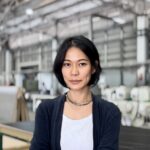
Aummy Ninkamhang, Stelapop
Stelapop
Aummy spent 9 years in textile development in the U.S. market, learning hard way how much waste the industry produces. In 2019, she co-founded Stelapop to turn textile waste into circular, next-gen materials.
TBI Klimaattrein Pitches
As part of the collaboration between TBI and MaterialDistrict, selected exhibitors will present short “flash pitches” on Wednesday 4 March in the Innovation Partner Theater at MaterialDistrict Utrecht 2026. These publicly accessible pitches serve both as the official selection moment for the three innovation vouchers—worth a total of €30,000—and as an inspiration platform for the wider sector. The winners will be announced on Friday 6 March during a festive ceremony.
Break lecture
12:45 – 15:05
TBI Pitches

13:35 – 14:05
Marta Guć, Izodom 2000 Polska
IZODOM technology as an ideal solution for energy-efficient and passive construction
Marta Guć has been associated with IZODOM for almost 15 years. She began her career working with B2C investors and construction companies in Poland and abroad. She has built and developed new markets, including the Czech Republic, the United Kingdom, and New Zealand, introducing products aligned with the company’s brand and customer needs.
For over 10 years, she has been conducting training and implementations on the use of IZODOM technology in highly energy-efficient and passive construction for contractors, designers, and foreign partners. For several years, she has also been involved in processes related to the product itself, including certification.
A construction technician, graduate of the Lodz University of Technology, Faculty of Production Engineering, a certified Passive House Tradeperson, specializing in building envelope and installations, and an energy auditor.
Additive Manufacturing
Additive Manufacturing is transforming how materials are designed, produced, and applied. This lecture programme explores the latest developments in additive manufacturing, from experimental materials and digital workflows to real-world applications, highlighting its potential to reduce waste, rethink production systems, and redefine the relationship between design and making.
Moderator: Anouk Groen
Recycled Materials (part 2)
The continuation of the lecture programme about recycled materials.
15:25 – 15:55
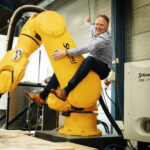
Marc van der Heijden, Triboo
NeverEnding Furniture – From Waste to Wonders – Digital Revolution in Furniture design, production and logistics.
Marc van der Heijden of Triboo is driven by a passion for making complex challenges simple. He is inspired by the positive energy of people who recognise opportunities, creating greater value and stronger returns for organisations that strive to excel. His motto is: “Impossible does not exist.” Guided by this mindset, he enables people and sets them in motion—turning ideas into action.
With this pragmatic approach, Marc has spent 19 years working in the logistics and construction sectors. Throughout his career, he has delivered innovative solutions that have exceeded client expectations. By rethinking and redesigning established supply chains, he has successfully revitalised and reconnected fragmented systems.

14:15 – 14:45
Nikki Krul, Studio Nikks
Rethinking textile waste
Nikki Krul is a designer and material researcher based in Eindhoven. After graduating from Design Academy Eindhoven, she founded Studio Nikks, where she works with textiles, colour and interior applications. Her project RAG focuses on reusing post-consumer textile waste through hand-tufting, transforming discarded garments into new tactile surfaces and wall pieces.
She explores how waste materials can become aesthetic, functional and socially meaningful alternatives within interior and architectural contexts.
16:00 – 16:30
Matthew Catania, The Ambitious Lab
Bio-Digital Fabrication: Neolithic Futures – Announcing a New Materiality
Matthew Catania is a Research Architect and the Founder of the Ambitious Lab. He is an Architecture graduate from the University of Malta. After completing his Bachelor’s degree, he moved into the field of Bio-Design, where he focused upon an exploration in the design of material behaviours, and as a result obtained a distinction in his Master’s degree.
Over time, his research has propelled him into developing a interdisciplinary design approach, operating within the intersections of biological design, digital-fabrication and programmable-matter. Matthew puts forward a material-based design agenda. A central attribute to his unique creative process is the ability to design in collaboration with matter.
14:50 – 15:20
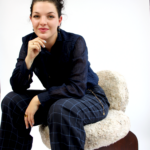
Vivian Erdtsieck, VivErdie
Textiles and what to do with them
Vivian Erdtsieck is a designer and material researcher working with recycling as both a practical and conceptual framework. Her work focuses primarily on recycled textiles, while also engaging with other reclaimed raw materials and waste streams. Trained in design, she later completed two master’s degrees in material science and material philosophy to better understand and challenge the systems behind material production. This shift reflects her ambition to contribute to a more sustainable industry at a structural level, rather than through aesthetics alone. Design remains an essential part of her practice, guiding how materials are shaped, experienced, and understood.

16:35 – 17:05
Nedzhmie Yusufova
Beyond Plastic: Bio-Material 3D Printing for Circular Spaces
Nedji Yusufova is a Delft-based bio-material designer working at the intersection of architecture, circular materials, and 3D printing. She develops home-compostable material recipes from local food waste, such as oyster shells and coffee grounds, and works with self-built bio-paste 3D printers that use significantly less energy than plastic printing. Her practice focuses on custom applications for architects and interior designers, including sculptural elements for public spaces, bioreceptive ceramics, seasonal shop-window installations, event objects, and bespoke interior pieces. Through material research, prototyping, and collaboration, Nedji helps designers translate circular ambitions into tangible, site-specific outcomes.
15:45 – 16:15
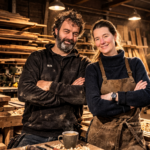
Rik Ruigrok & Marije Remigius, Herso
Round is not circular
Where others see waste, Rik and Marije see possibility. Rik has spent over 25 years in Loosbroek crafting beautiful tables, floors, and frames from reclaimed wood, guided by a simple truth: nothing needs to be thrown away. Marije brings 25 years of global interior project management, engineering sustainable, affordable spaces that prove circularity works in practice. Together they bridge the workshop and the boardroom — one rescuing raw materials, the other reimagining how interiors are built. Both share the same conviction: true craftsmanship doesn’t cost the earth, it protects it.