
Lecture programme Thursday 5 March 2026
The lectures are in English unless stated otherwise. The lecture programme is subject to change.
If you are looking at this page on mobile, please turn your phone in horizontal mode for a clear overview of the programmes.
Theater 1
Theater 2
Cutting-Edge Ceramics
Cutting-Edge Ceramics is a lecture series exploring the evolving boundaries of ceramic materials. From recycled ceramics to unique design, the programme brings together designers, researchers, and makers who are redefining ceramics — not as a traditional craft, but as an innovative material responding to urgent questions around sustainability, technology, and material culture.
Biobased Materials (part 1)
Biobased Materials are reshaping the way we design, build, and produce. This programme explores the emerging landscape of biobased materials through design, research, and real-world applications, highlighting their potential to reduce environmental impact while opening up new aesthetic, functional, and cultural possibilities for the built environment and product design.

10:45 – 11:15
Niels Monsieurs, Palet
Palet: Making unique tiles at scale
Niels Monsieurs is a former advertising and entertainment executive turned tile maker at Palet, a ceramic tile brand challenging a very traditional industry. At Palet, he focuses on turning custom design principles into a scalable, made-to-order system that works for architects and designers worldwide. With a background in creative production and operations, Niels has spent most of his career figuring out how to scale creativity – from building global entertainment campaigns to producing ceramic tiles. His work sits at the intersection of design and execution, with a clear focus on making big ideas practical, repeatable, and commercially viable.

11:00 – 11:30
Aniela Hoitink, MYCOTEX
From material innovation to system innovation; why materials alone are not enough
Aniela Hoitink is a visionary entrepreneur transforming fashion, textiles, and interiors. After designing for brands like Tommy Hilfiger, she set out to tackle the fashion industry’s sustainability challenges. She pioneered mycelium-based textiles and founded MYCOTEX, an automated platform enabling fully customized products from biomaterials, with PARYCEL as its first commercial material. Her work has earned global recognition, including the Global Change Award, EU Social Innovation Competition Impact Prize, and GEC Textile Award. Celebrated as one of the 100 most innovative women worldwide, Aniela inspires a new generation to rethink materials, design, and circular production.

11:20 – 11:50
Lotte Douwes, Studio Lotte Douwes
Fragments of Wonder — a reflection of change
Meaningful Matter transforms discarded ceramics and shards into high-end, timeless interior products and tableware while pioneering a circular and human-centred alternative to today’s polluting porcelain industry.
Founded in 2024 by designer Lotte Douwes, Meaningful Matter grew from a lifelong bond with tableware and a critical eye on the ceramic industry. After witnessing vast ceramic waste in China, Lotte set out to transform the system itself. Her vision unites aesthetics, functionality, and responsibility — crafting circular collections that carry both beauty and meaning.

11:35 – 12:05
Aled Roberts, Dekiln
Bio-ceramic tiles for a sustainable future
After completing his PhD, Dr Aled Roberts spent several years as a scientist specialising at the interface of Materials Science and Biotechnology. In 2020, working from his basement laboratory over the COVID-19 pandemic, he invented a method to produce ceramic-like biomaterials through a simple, low-energy process called BioSintering. This technology became the foundation of his startup company Dekiln, which intends to scale-up and commercialise BioSintering to make decorative bio-ceramic tiles with a very low carbon footprint and high recycled content. He and his team have recently been awarded £3m to support this ambition.
12:10 – 12:40
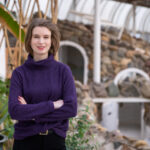
Ward Massa, FRONT® Materials; Camilo Restrepo, Biomason®; and Alasdair Bremner, Alusid®
Rethinking how materials are made
FRONT advances the development, use and reuse of planet-friendly aesthetic building materials. Working with partners across the entire value chain — from demolition and production to architecture and real estate — we turn bold ideas into realworld solutions.
Like the Mimmik Tile: the first-ever tile that grows with the help of bacteria, now produced on an industrial scale by Biomason.
Or the Skip Tile: one of the most sustainable ceramic tiles available today, because it is at least 95% waste-based and produced with a unique energy- and water-saving process by Alusid.
12:25 – 12:55
Lisanne Peters, Symbiomatter
How we invent biobased materials
Lisanne Peters is the founder of SymbioMatter, a start-up developing fully bio-based and compostable foam materials as an alternative to fossil-based foams. With a background in biomedical science, product design and sustainable business innovation, she focuses on scaling SymbioFoam: a plant-based material made from residual streams, designed for protective packaging and product cushioning without microplastics or toxic residues.
12:45 – 13:15
Tom van Soest, Blended Materials
TBA
TBA

13:00 – 13:30
Jannis Kempkens, LignoLight – Weißensee Kunsthochschule Berlin
Biobased Material Research – A Design Perspective
Jannis Kempkens is a designer and materials researcher working at the intersection of circular design, sustainability, and climate action. He has collaborated with organisations such as Precious Plastic, Terra.do, and the Or Foundation, and is currently a researcher at the Weißensee Academy of Art Berlin. There, he is part of the interdisciplinary project LignoLight, which explores how lignin – a byproduct of cellulose and bioethanol production – can be transformed into sustainable materials for the furniture and fashion industries, including plant-based leather alternatives, foams, thermoplastic sheets, and 3D-printable filaments.
break
break
BNI workshops
This year, BNI is once again contributing to the lecture programme at MaterialDistrict Utrecht with two thought-provoking and topical sessions that demonstrate how materials and design can make a difference today. The exhibition’s theme, NextNow, focuses on biobased and circular materials and solutions that are already applicable in practice. BNI’s lecture programme aligns seamlessly with this theme.
Hosted by BNI
Biobased Materials (part 2)
A continuation of the lecture series on biobased materials.

14:00 – 14:30
Gijs Bruggink
Wood & Wellbeing: de kracht van hout in onze leefomgeving (NL)
How does timber influence health and everyday wellbeing? ORGA explores this question in a new research project that examines the impact of timber in living and working environments. The report, to be published this spring, clearly outlines both the physiological and psychological benefits of this natural material. As timber construction continues to grow rapidly, one central question remains: are we fully utilising the potential of this material? And what does it offer us—as residents, users, and as a society?
During this knowledge session, Gijs Bruggink will share valuable and directly applicable insights into the role of timber in creating healthier and fossil-free buildings. Participants will also receive an exclusive first look at findings from the report Wood & Wellbeing.
14:15 – 14:45
Wilfried Martens, Reduco
TBA
TBA

14:35 – 15:05
Rick Porcelijn
Crash Course duurzaam & circulair ontwerp: kies met impact! (NL)
What happens when raw materials become scarce and linear production turns into a real business risk? In this knowledge session, Rick Porcelijn (16 Mammals) explores how designers, makers, and clients can make future-proof choices in a world where virgin materials are no longer guaranteed. Building on the successful launch of the ‘Snelstartgids Circulaire Materialen’ in 2025, he introduces new insights and practical tools for everyday design practice.
Participants will gain first access to the new ‘CO₂ Snelstarttool’, offering instant insight into the impact of material and finishing choices, as well as a clear overview of relevant legislation and sustainability frameworks—supporting smarter, circular, and resilient design decisions.

14:50 – 15:20
Indrė Mikuckė
New Materiality: Interweaving Creative Experimentation and Dialogue with Nature
Indrė Mikuckė is a clothing and accessories designer, lecturer in the Fashion Design study programme at Kauno Kolegija Higher Education Institution, and Junior Researcher at the Creative Interdisciplinary NEB Research Centre at the Vilnius Academy of Arts. Her research seeks to transform harmful processes into more sustainable ones by engaging with the natural environment. Through hands-on experimentation, she explores the potential of new surfaces and alternative forms of leather, aiming to reconnect human life with the natural world as an interconnected fabric. Her work bridges creative practice and ecological responsibility, contributing to the future of biobased materials.
15:25 – 15:55
TBA
TBA
TBA
15:45 – 16:15
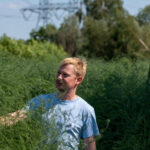
Rik Maarsen, Rik Makes
How to compare sustainable materials
Rik is a pioneer in sustainable interior materials and a specialist in biobased, CO₂-conscious building solutions. He helps organizations and designers transform materials into healthy, future-proof products that serve people, nature, and the planet. From processing local fibers like roadside grass to developing high-quality wall panels, Rik combines hands-on experience with innovation. He inspires and advises architects, facility managers, and real estate professionals to turn circular ambitions into praktikal, tangible results.
16:00 – 16:30
TBA
TBA
TBA

16:20 – 16:50
Marjanne Cuypers, SeaWood Materials
From Ocean to Object: Biobased Material Innovation with Seaweed and Plant Fibers
Marjanne Cuypers is the founder of SeaWood Materials, a company developing innovative biobased materials derived from seaweed side streams and other plant-based fibres. With a background in design and material development, she works at the intersection of biology, manufacturing and design, translating natural resources into scalable, high-performance material solutions. Her work explores how marine biomass can contribute to a more sustainable built environment, while maintaining functionality and aesthetic quality. Through research, prototyping and interdisciplinary collaboration, she aims to accelerate the transition toward regenerative and circular material systems.
16:35 – 17:05
TBA
TBA
TBA
16:55 – 17:25
TBA
TBA
TBA