
Lecture programme Friday 6 March 2026
The lectures are in English unless stated otherwise. The lecture programme is subject to change.
If you are looking at this page on mobile, please turn your phone in horizontal mode for a clear overview of the programmes.
Theater 1
Theater 2
YOUNG Talent Programme
The aim of the Young Talent Programme is to offer emerging designers and researchers a professional platform and connect them with an inspiring and relevant network. In this lecture programme, recently graduated designers talk about their sustainable ideas.
Moderator: Leonne Cuppen
Tomorrow’s Timber Talks: Busting the Timber Myths
The recently published book The Timber Truth dismantles sixteen of the most common misconceptions about timber – from concerns about fire safety, strength, and lifespan, to debates on carbon storage, circularity, and sustainable forestry. In this lecture programme, selected architects tell you more about their timber-based designs.
For Dutch and UK architects, the Tomorrow’s Timber Talks are registered with the Dutch Architects’ Register and in UK with CPD Certification Service as officially recognised continuing professional development (CPD) training courses.
Moderator: Pablo van der Lugt
Hosted in collaboration with PEFC
10:45 – 11:15
Boyana Voynova
Seed Matters
Boyana Voynova is an information designer and multimedia artist, engaged in community-based and collaborative initiatives. In her practice she works with topics, related to the climate, consumption systems and the way we interact with the surrounding world, translating them into interactive projects using design research methodologies and visual storytelling. Driven by curiosity for social systems, she strives to challenge the way we interact with the space and matter surrounding us through various mediums from graphic design and experimental printing methods to textile and ceramics.
The talk explores seeds as data carriers, and political artifacts, linking nature, technology, ethics and material culture. How much future can fit in the palm of your hand? If a seed is a prototype, what is it optimized for? Who owns generative material systems? When does a material become a monopoly?
11:00 – 11:30
Dave Lomax, Waugh Thistleton Architects
An architecture of sufficiency – lessons from 20 years designing for mass timber construction
Dave Lomax is an Associate Director at Waugh Thistleton Architects, who are the world’s leading architects in the field of mass timber, shortlisted for the RIBA Stirling Prize in 2018 and selected as Architect’s Journal ‘Architect of the Year’ in 2023/24, having also been awarded the RIBA President’s Medal for Practice Located Research in 2010.
Dave led the design and delivery of the world’s largest CLT building at the time – Dalston Works in east London – and the multi-award winning Black and White building which is the tallest all timber office building in central London.
Alongside practice Dave has taught at the Fay Jones School of Architecture at the University of Arkansas in the US and at the London School of Architecture amongst others. He is chair of the London Borough of Southwark Design Review Panel and lectures widely about the work of the practice.
11:20 – 11:50
Carmen Enríquez
Controlling Roughness. Exploring the influence of 3D printing on the roughness of a bio mixture to design controlled acoustic properties
Carmen Enríquez is an Industrial Design Engineer specializing in design for additive manufacturing. Her practice focuses on 3D production experimentation, searching for functional outcomes with a distinctive visual expression unique to the material and technology implemented. She combines technology- and material-driven design processes, featuring creative exploration with strong technical understanding.
11:35 – 12:05
Ad Kil, RO&AD Architecten
Timber as an integral part of regenerative architecture
After finishing TU Delft Ad started his own architect’s office in Utrecht in 1993. With mixed succes he worked on several nice, but not very memorable projects. After moving to the south-west of The Netherlands he started to work together with Ro Koster and they started the office RO&AD Architecten. The office started to flourish after 2004 when they started to concentrate on sustainable design. After finishing the Moses Bridge in 2010, which was broadly published, the connection between building and landscape became a common thread in the commissions of the office, and from there, the interest in regenerative design and system design grew. Nowadays the small team of RO&AD works on several projects on all scales: from a strategic vision on sea level rise in Zeeland, several buildings in the former Hedwigepolder in Zeeland, to a bridge in Norway.
12:10 – 12:40
Moritz Plöns
Greenhousing Fungi: Reciprocity in Bio-Design and 3D-Grown Objects
Moritz Plöns is a bio- and industrial designer (M.A.) based in Cologne. In his projects, he creates objects that act as tools for exploring posthuman ideas, eco-social justice, and circularity in depth. His approach is consistently material-driven, with a focus on the development of circular materials, especially made from fungal mycelium.
His graduation project at the Royal Academy of Arts The Hague “Greenhousing Saprophytes” (2025) investigated reciprocal approaches in bio-design practices combined with a three-dimensional growth for pure mycelium.
Amongst others, his work was exhibited at the Dutch Design Week 2025, the Kölner Passagen 2026 and the Museum of Applied Arts Cologne (MAKK).
12:25 – 12:55
Boris Zeisser, Natrufied Architecture
Apartment buildings in Wood – the proof of the pudding is in the eating
Boris Zeisser (1968) graduated with an honorable mention 1995 from the Technical University of Delft. He worked from 1996 till 2001 at the architecture office of Erick van Egeraat associated architects in Rotterdam before founding his own office Twentyfour-hours architecture with Maartje Lammers in 2001. After terminating 24H in 2015, Boris founded the new office Natrufied-architecture based in Bergen, the Netherlands. Together with his partner Anja Verdonk he runs his office with a special focus on circular designs and building with wood.

12:45 – 13:15
Alice Gielen
Small Machines, Big Ideas: How Accessible Tools Can Enable Scalable Innovation in Textile Design
Alice Gielen is a designer and researcher working at the intersection of textiles, computation, and craft. She develops small-scale fabrication tools, such as the Sliver Fiber Printer and J.3D.1 (JEDI), designed to support textile and fashion designers in experimentation and material exploration. Her practice combines hands-on making, speculative machine design, and research-through-design and has been presented across academic, fashion, and experimental design contexts.
13:00 – 13:30
Shai van Vlijmen, NarrativA architecten
Biophilic Passive Timber Home
Shai van Vlijmen is a biophilic architect and founder of NarrativA Architects, a leading practice in ecological and biobased design. With over twenty years of experience, he combines scientific precision with creative vision and has extensive expertise in biobased materials and building physics. His work ranges from biobased (passive) homes to large-scale renovations, where health, comfort and beauty go hand in hand with sustainability. Shai is actively committed to advancing biobased construction in the Netherlands through education, lectures and professional training.
bREAK
13:35 – 14:05
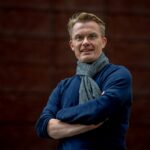
Robert Platje, Mei architects and planners
Circular Wood Construction: The Future of Construction
Robert Platje has been working as a building technologist at Mei architects and planners since 2000. In 2017 he was appointed Associate Partner, and since 2022 he has been an official Partner of the firm. Robert specializes in architectural detailing and sustainable construction and plays a key role in translating design concepts into smart, buildable solutions. Within Mei, he safeguards the quality and consistency of the design through all stages, from concept to execution. In addition, Robert is a BREEAM-NL Expert at the Dutch Green Building Council, a committee member for Commercial Buildings at SBR, and a member of the Policy Advisory Committee on Technology and Regulations at the BNA. He enjoys sharing his expertise as a guest lecturer at institutions such as TU Delft, SBR, and Bouwen met Staal.
14:00 – 14:30
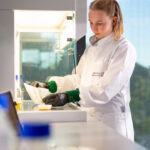
Isa Jansen
Living traces: designing with decay to increase the social acceptance of bio-based materials
Isa Jansen is a circular bio-designer exploring how aesthetics, materials and living organisms can shape a circular future. Inspired by nature’s non-toxic, waste-free processes, she seeks to collaborate with nature rather than work against it. Working with living, waste and bio-based materials, her multidisciplinary, research-driven practice combines experimentation, sample making and prototyping. In Living Traces, she challenges ideas of perfection and permanence by embracing imperfection, transformation and decay.
14:15 – 14:45
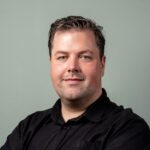
Alexander Beeloo, Krft architects
Timber Construction and Circular Design in Public Buildings
Alexander Beeloo (1990) is an architect and project leader at KRFT Architecture Studio in Amsterdam. He graduated in 2019 from the Academy of Architecture Amsterdam. He works on a broad range of sustainable public buildings, with a clear specialization in biobased architecture, timber construction, and circular design. His work spans both new construction and transformation projects, focusing on the creation of healthy, future-proof learning and community environments. Examples include IKEC De Zevensprong in Hoorn, where timber and biobased materials are central to the design, and a circular multifunctional center for the village of Zetten, where reuse and material-conscious design play a leading role.
14:35 – 15:05
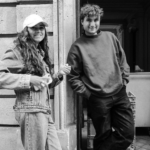
Philippe Gaud
Le Labo 1.0 by Baguette Studio – What if we owned raw materials instead of objects?
Baguette Studio is a design studio based in Paris, founded by Philippe Gaud and Emma Lohner. Fostering craftsmanship and matter, we strive to question social and industrial systems in order to create viable, responsible and accessible solutions. We aim to combine in a sensible way Commitment, Industry and Services, to build together an optimistic future.
Le Labo 1.0 is a proposal for an alternative way of consuming goods. What if instead of owning objects we would own raw materials that would stick with us for the rest of our lives? In an attempt to value the ressources surrounding us, the objects produced are conceived not as a static product but as a material in motion — endlessly remouldable, thanks to their blend of 100% natural wax.
14:50 – 15:20
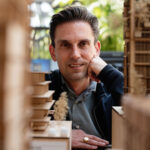
Dennis Hauer, Urban Climate Architects
Scaling up mass-timber through innovation
Dennis Hauer is architect director at the Dutch firm Urban Climate Architects, a progressive and innovative architectural firm with offices in Delft and Groningen. Their focus is on densifying and enhancing the quality and social livability of existing cities by using the power of architecture. Creating a healthy, biodiverse living environment and applying circular and biobased principles are key elements in their design. The firm is one of the leaders in timber construction design in the
Netherlands. In addition to his role as an architect, Dennis is a BREEAM-NL expert, Building Life Ambassador for the Dutch Green Building Council, and a member of the Built by Nature Advisory Board.
15:25 – 15:55
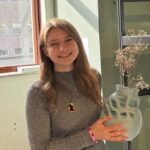
Anika Greyling
Layered Lines: Using gravity in experimental large-scale 3D printing techniques
Anika Greyling is a product designer working with material-driven design and experimental making. Her practice centres on exploring material behaviour through processes such as 3D printing, mould-making, and iterative experimentation. By combining digital tools with hands-on fabrication, she develops designs that emerge from the interaction between material properties, technical constraints, and form. This process informs durable, functional, and innovative design solutions.

15:45 – 16:15
Miriam Michon, KOW Architecten
Houtbouw in de Praktijk: Van Ontwerp tot Oplevering (NL)
Miriam Michon is an architect at KOW Architecten in Eindhoven and The Hague, where she has been working for nearly ten years. She studied architecture at Eindhoven University of Technology (Bachelor’s degree) and Delft University of Technology (Master’s degree).
Her work focuses primarily on housing projects and small-scale healthcare developments, with a strong emphasis on human-centred and integrated design solutions. Sustainability, circularity, and health are key principles in her approach. Timber plays a central role in her designs, with Casa Vita in Pijnacker as a recent example, which was nominated for the Timber Construction Award 2025.

16:00 – 16:30
Maëlys Venkiah
The Shapes of Sugar: From Crystal to Caramel: A Material Journey
Maëlys Venkiah is Franco-Maurician food designer, who graduated from Design Academy Eindhoven in 2025. Her practice centers on sugar and caramel as structural and sculptural materials. Through processes such as casting, blowing, and pulling, she investigates viscosity, crystallization, and thermal instability. Working between solid and liquid states, she reveals the mechanical and optical properties of sugar. By treating an edible substance as a construction material, she challenges hierarchies between craft, design, and food, positioning sugar as both medium and message in contemporary material discourse.

16:20 – 16:50
Jarrik Ouburg, HOH Architecten
Osaka to Zuid-Oost
Jarrik Ouburg (1975) studied architecture at Delft University of Technology and ETH Zurich, where his graduation project received the Archiprix International award. Since 2017, he has been a founding partner of HOH Architecten together with Freyke Hartemink. The practice works on projects at multiple scales within the urban landscape.
The project Switi won the National Timber Construction Award 2024 and was nominated for the Zuiderker Prize of Amsterdam. HOH Architecten’s work has a strong international orientation, shaped by professional experience in, among other places, Switzerland, Belgium, and Japan. Jarrik Ouburg is a member of the Spatial Quality Committee of the Municipality of Amsterdam and is regularly invited to act as a speaker, critic, and jury member.